Whether you’re a casual player or a curious beginner, it’s easy to be drawn in by the bright visuals and upbeat sounds of online gaming. With so many choices available, you might wonder how games like online slots and Slingo really differ once you start playing.
Both offer quick rounds and the chance of a win, but they reach that outcome in different ways. This article walks through the main distinctions in gameplay, presentation and player interaction so you can decide which fits your taste.
Read on for a clear comparison that explains how each game works and what to expect when you try them.
What Are Online Slots & Slingo Games?
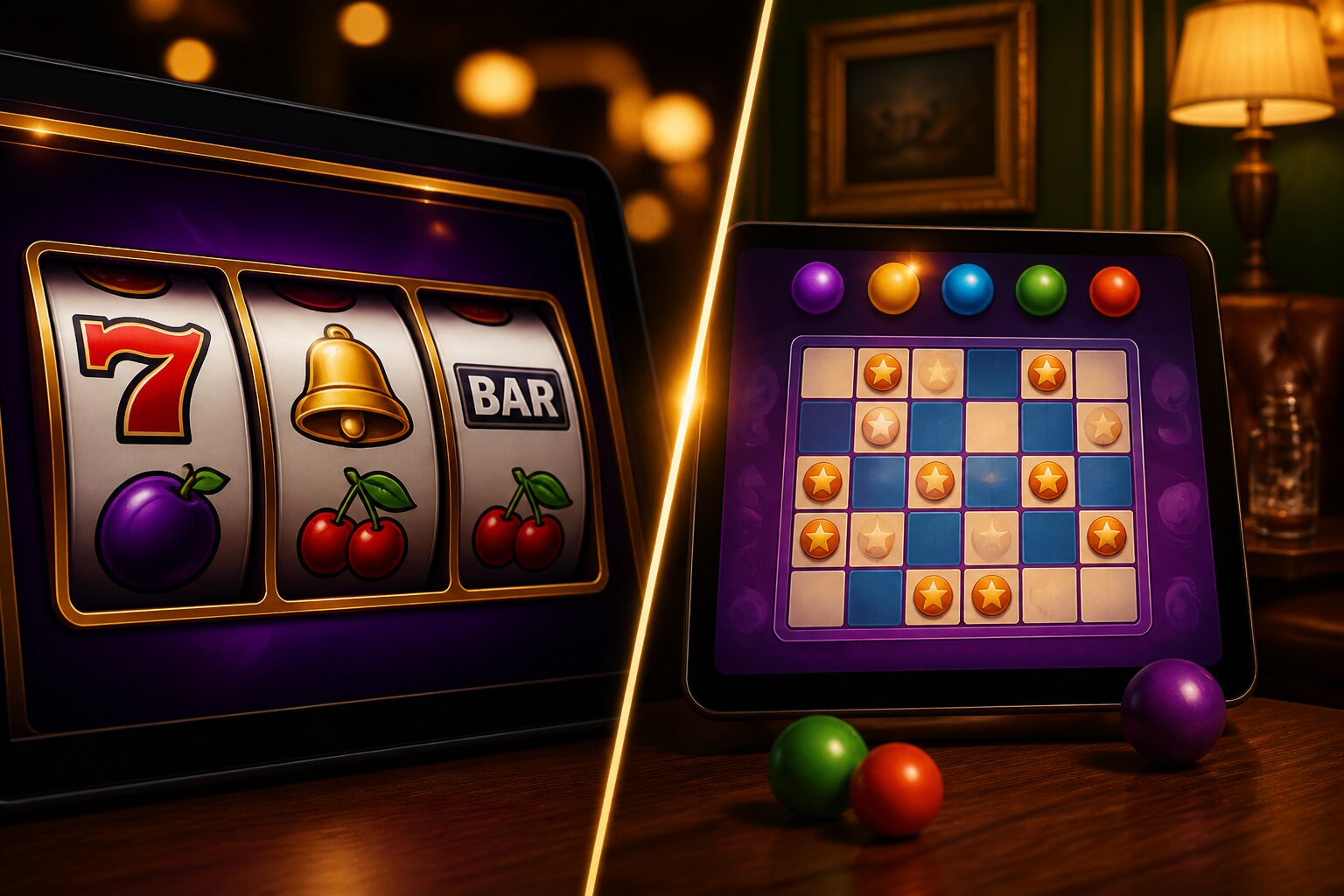
Online slots are the digital successors to the classic fruit machines. You spin a set of reels populated with symbols and aim to form winning combinations along predefined lines. Modern slots often include bonus rounds, free spins and special symbols such as wilds or scatters. Outcomes are determined by a random number generator, and the experience is built around short, repeatable rounds.
Slingo blends bingo’s pattern-based play with slots-style spinning. A typical game presents a grid like a bingo card where numbers or symbols are revealed from a separate spinner. When a spun number matches the card, that square is marked off, and the objective is to complete horizontal, vertical or diagonal lines called Slingos. Many versions add jokers, wilds or bonus features that support pattern completion rather than lining up symbols on reels.
Both game types can be played with real stakes and are designed to be accessible to newcomers. The difference lies in their focus: slots centre on reel combinations and themed presentation, while Slingo emphasises pattern completion within a grid. In the next section we examine how those design differences shape the actual gameplay.
Gameplay Mechanics: How Do They Differ?
Gameplay in both formats is driven by random outcomes, but the structures and pacing create distinct player experiences.
Core Game Structures Compared
Online slots present reels in rows and columns. A spin produces a new arrangement of symbols, and wins are scored when certain symbols align on paylines. Slots range from simple three-reel formats to complex five-reel or more games with multiple paylines and ways to win, and their mechanics are largely single-action: spin, observe, repeat.
Slingo uses a card-like grid, commonly 5x5, with a spinner that supplies numbers or symbols to mark off the card. Rather than aligning symbols on paylines, the emphasis is on filling patterns on the grid within a limited number of spins. This makes Slingo feel more like a short puzzle each round, with a focus on incremental progress across the grid.
Both approaches keep each round self-contained, but the shift from line-based matching to pattern marking changes how players perceive momentum and strategy.
Bonus Features & Mini-Games
Slots often include layered bonus mechanics. A slot might trigger free spins, award multipliers, or open a mini-game where the player selects boxes to reveal prizes. These features are designed to increase engagement and vary payout structures within the same session.
Slingo’s bonuses are typically integrated with the grid mechanics. Jokers or wilds can substitute for numbers to help complete a line, and some games unlock bonus rounds when a set number of Slingos is achieved. While the flavour differs, both game types use extras to extend play and introduce moments of higher reward potential.
Paylines, Reels, and Grids
Slots depend on paylines and reel configurations to define winning outcomes. The number of paylines and the arrangement of reels directly affect how frequently wins occur and the variety of combinations available.
Slingo dispenses with paylines altogether. Instead, the grid and the spinner determine progress. Success is measured by completed lines across the card, shifting the player’s attention from symbol alignment to pattern fulfilment. This structural contrast explains why sessions of Slingo can feel more methodical, while slots tend to be faster and more visually driven.
With those structural differences in mind, the next section looks at how much players actually interact with each game.
How Does Player Interaction Vary?
Interaction in slots is deliberately simple. Players choose a stake and trigger a spin, then watch the reels settle. Some slots offer choices within bonus rounds or adjustable bet levels, but most of the play cycle is passive, with the system handling outcomes.
Slingo invites a touch more engagement during each round. Each spin can change the state of the grid, and decisions occasionally arise in bonus phases where power-ups or extra spins are selectable. The marking of numbers gives a visible sense of progress, and that steady feedback loop keeps players involved from spin to spin.
Neither format rewards skill in any deterministic way; outcomes are random. The difference is in how involved the player feels: slots simplify decisions to a minimum, while Slingo provides continual visual feedback and occasional choices that make rounds feel more interactive. Ahead, we’ll explore how aesthetics and themes support those different experiences.
Visual Style & Thematic Elements
Slots are often built around distinctive themes. Developers create games inspired by history, fantasy, films or other motifs, and they use graphics, animations and soundtracks to immerse the player in that setting. A modern slot can approximate a short audiovisual experience, with elaborate backgrounds and animated sequences during bonus features.
Slingo usually keeps a cleaner, grid-focused presentation, but that doesn’t mean it lacks character. Themes can colour the tiles and spinner, and lighter animations and sounds add charm without obscuring the grid. The visual priority is legibility—players need to see which numbers are marked—so design choices balance clarity with style.
The result is that slots tend to feel more cinematic, while Slingo favours clear, functional layouts that emphasise gameplay flow. Next, we’ll consider how the mathematical profiles of games differ and what that means for play.
Are RTP Rates and Volatility Different?
Return to Player (RTP) indicates the theoretical percentage a game is programmed to return to players over a long period. Both slots and Slingo publish RTP figures so players can compare titles. Typical slot RTPs commonly fall between about 92% and 97%, while Slingo games often sit in a similar range, though exact values vary by individual game.
Volatility describes payout patterns. High volatility yields larger but less frequent wins, while low volatility produces smaller, more frequent payouts. Both slots and Slingo are available across that spectrum, so choice of title has a greater impact on session feel than category alone.
These figures are statistical measures, not predictions for any single session. They’re useful for selecting a game that aligns with spending and play preferences, and for setting expectations about how often wins may appear. With that numeric context noted, the next section looks at the social side of each game type.
Which Is Better for Social Play?
Slots are primarily solo experiences, though many operators add social features like leaderboards or tournaments to foster competition. Those additions give slots a communal dimension without altering the core single-player mechanic.
Slingo can be presented in a more social environment, particularly where bingo-style communities are already active. Some versions include chat or community events that encourage social interaction around shared goals and achievements. That communal layer can make Slingo feel more like a group activity, even when rounds themselves remain individually resolved.
Both game types can be enjoyed socially if the platform supports interaction, but the social features are complementary rather than integral to gameplay. The following section examines how each fares on mobile devices.
Mobile Gaming Experience: Slots vs Slingo
Slots have been optimised for mobile play for many years. Developers adapt controls and graphics so reels and buttons remain clear on small screens, and core features like autoplay or bonus triggers work smoothly on phones and tablets.
Slingo’s grid-based layout adapts naturally to touchscreens too. The simple tap-and-mark interactions suit mobile play, and menus are typically condensed for easy access on handheld devices. Both game types carry the same account protections and control settings to mobile, ensuring continuity between desktop and pocket play.
So whether you prefer the cinematic pull of a themed slot or the steady rhythm of a Slingo grid, both options deliver a polished mobile experience. That brings us to the practical decision of choosing between the two.
Conclusion: Choosing Between Slots and Slingo
Slots and Slingo offer two distinct paths to the same sort of entertainment: short rounds, clear rules and a range of bonus mechanics. If you enjoy visually driven, theme-led play where each spin is a standalone event, slots are likely to appeal. If you prefer a grid-based game that emphasises pattern completion and visible progress within each round, Slingo may suit you better.
Both kinds of games are designed under regulated standards and display published RTP and volatility information to help players choose. Use those figures and the style of play you enjoy to guide your selection, and set personal limits before you start so play stays within your comfort zone.
Ultimately, the best choice is the one that fits your preferences and keeps play responsible and enjoyable.
**The information provided in this blog is intended for educational purposes and should not be construed as betting advice or a guarantee of success. Always gamble responsibly.